How Five Rural Illinois Sites Sent 112,798 Meals Home in One Summer
Five Rural Sites, Illinois
A Returning Site and Four New Ones
A year ago, volunteers ran one pickup site in Woodford County, at the Peoria Trap and Skeet Club, and handed out 20,314 meals over the summer. That story is in the 2025 Woodford County case study.
This summer, Ujima and its local partners ran five sites across rural Illinois under USDA SUN Meals To-Go. Four opened for the first time: Franklin, Grace Church, Green Valley in Tazewell County, and the Village of Mark. Peoria Trap and Skeet came back for a second year.
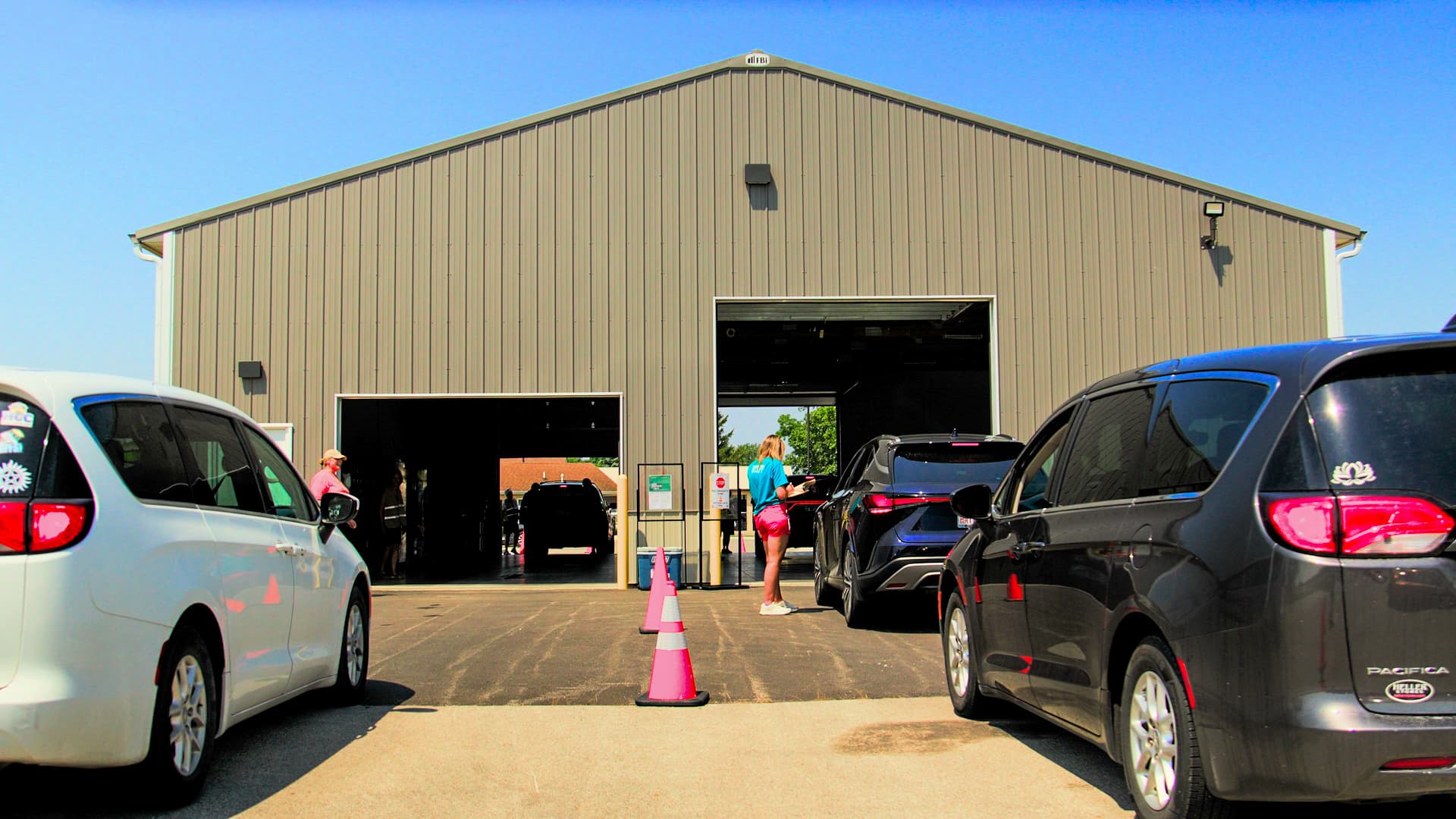
Each site used the same weekly pickup. A family drove through once a week, and volunteers loaded seven breakfasts, seven lunches, and shelf-stable milk for every registered child.
The Results
The season totals:
- 112,798 meals distributed
- 915 families registered
- 797 unique families participated
- 87.1% overall family participation rate
- 5 sites, 4 of them new in 2026
| Site | Meals Distributed | Family Participation |
|---|---|---|
| Peoria Trap and Skeet, Woodford County | 29,134 | 95.6% |
| Franklin | 21,462 | 94.3% |
| Grace Church, Woodford County | 15,148 | 79.1% |
| Green Valley, Tazewell County | 17,248 | 85.9% |
| Village of Mark | 29,806 | 80.7% |
| TOTAL | 112,798 | 87.1% |
Source: Ujima Hunger Coalition 2026 registration and check-in records and site meal count records. Meals distributed reflect full meal packages provided to children at distribution, which may differ from meals eligible for reimbursement on partial operating weeks.
Woodford County More Than Doubled
Woodford County is the one county with a 2025 baseline. That year, the Peoria Trap and Skeet Club handed out 20,314 meals on its own. In 2026, Grace Church joined it, and the two sites handed out 44,282. That is 23,968 more meals, an increase of roughly 118%.
Making It Work in Franklin
Andrew Ford, a rising eighth grader in Franklin, noticed gas prices climbing and groceries getting more expensive, and knew that was putting a strain on families. He wanted to help families feed their children, so he made that his community service project for his FFA record book.
He enlisted his mother, Aleece Ford, and the two of them started calling around. Through the state's SUN Meals program they reached the Ujima Hunger Coalition, which took on the food and the program requirements. The Fords ran the site every Tuesday from 4:30 to 6 p.m., and any family with children up to 18 could sign up and drive through for a week of breakfasts and lunches. The Fords fed 196 children the first week and 260 the second.
The Fords kept it going until school started in August. By then they had distributed 21,462 meals, and 149 of Franklin's 158 registered families had taken part. The Source told the story on July 9, 2026.
"...That just feels so good to help all those people, I never thought we would have so many people come"
Andrew FordRising eighth grader, Franklin, as told by his mother
The Community Embrace
Across all five sites, 915 families registered and 797 of them showed up, nearly nine in ten. Peoria Trap and Skeet and Franklin had the highest rates, at 95.6% and 94.3%.
Parents noticed the difference. One parent of three wrote that the vegetable juices got a fruit-only two-year-old to eat vegetables, and that the volunteers stayed upbeat through hot sun and pouring rain.
"The food was plentiful and there were options for my 6yr old, 2 yr old and 12m old to eat and enjoy! They were thrilled to find their new food cards weekly and see what surprise foods would come!"
Parent of three2026 program participant
Why This Matters
Local partners brought a place and the people to run it: a church, a trap and skeet club, a village, and a family in Franklin. Ujima handled compliance, procurement, and the weekly deliveries.
For state agencies and funders: a weekly pickup reaches families who cannot get to a daily site, local partners carry a small share of the work, and four communities ran it for the first time in one summer.
Looking Ahead
By the end of August, volunteers at five sites had sent 112,798 meals home with families. Four of those sites were in their first summer.
One parent's note ended with a request:
"I pray it returns next year to continue to bless families with full-happy-healthy bellies and ease pocketbooks!"
Parent of three2026 program participant